Last updated November 22, 2026
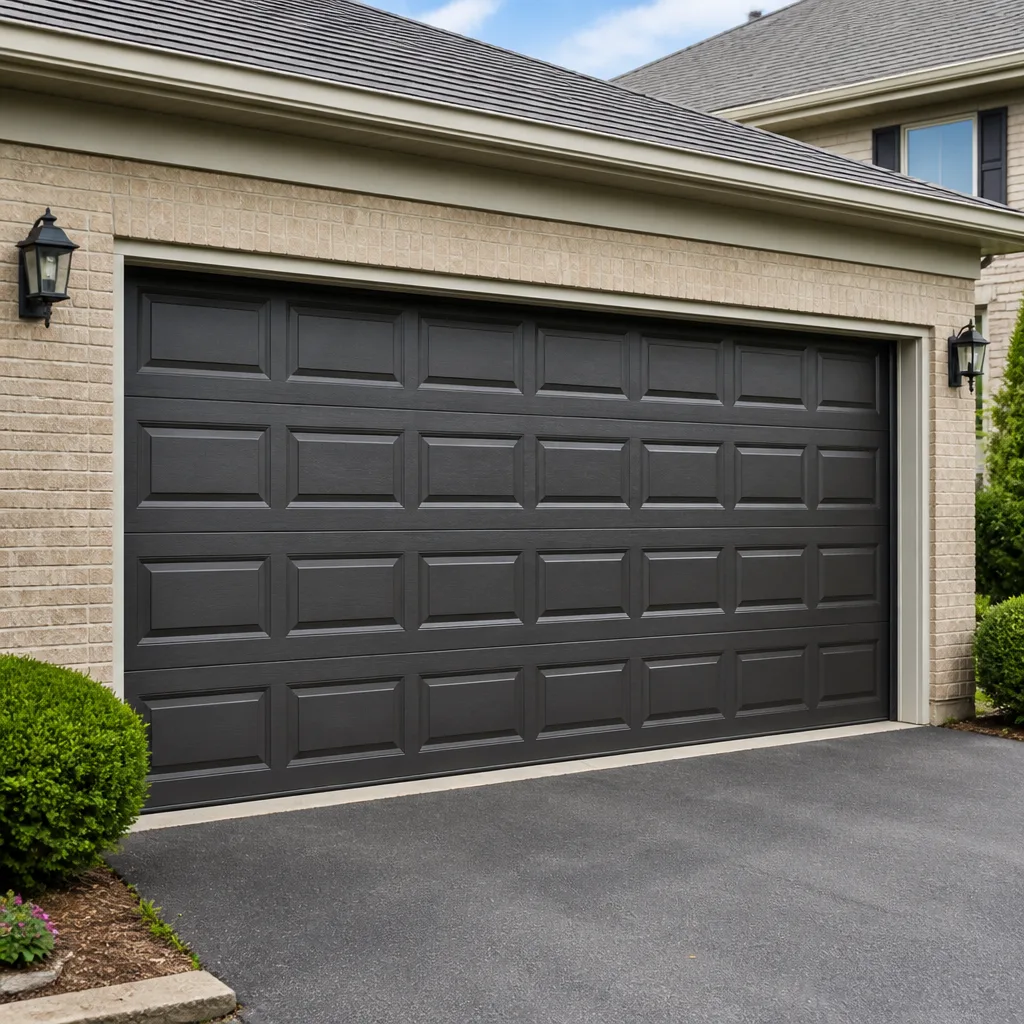 Raised-panel steel
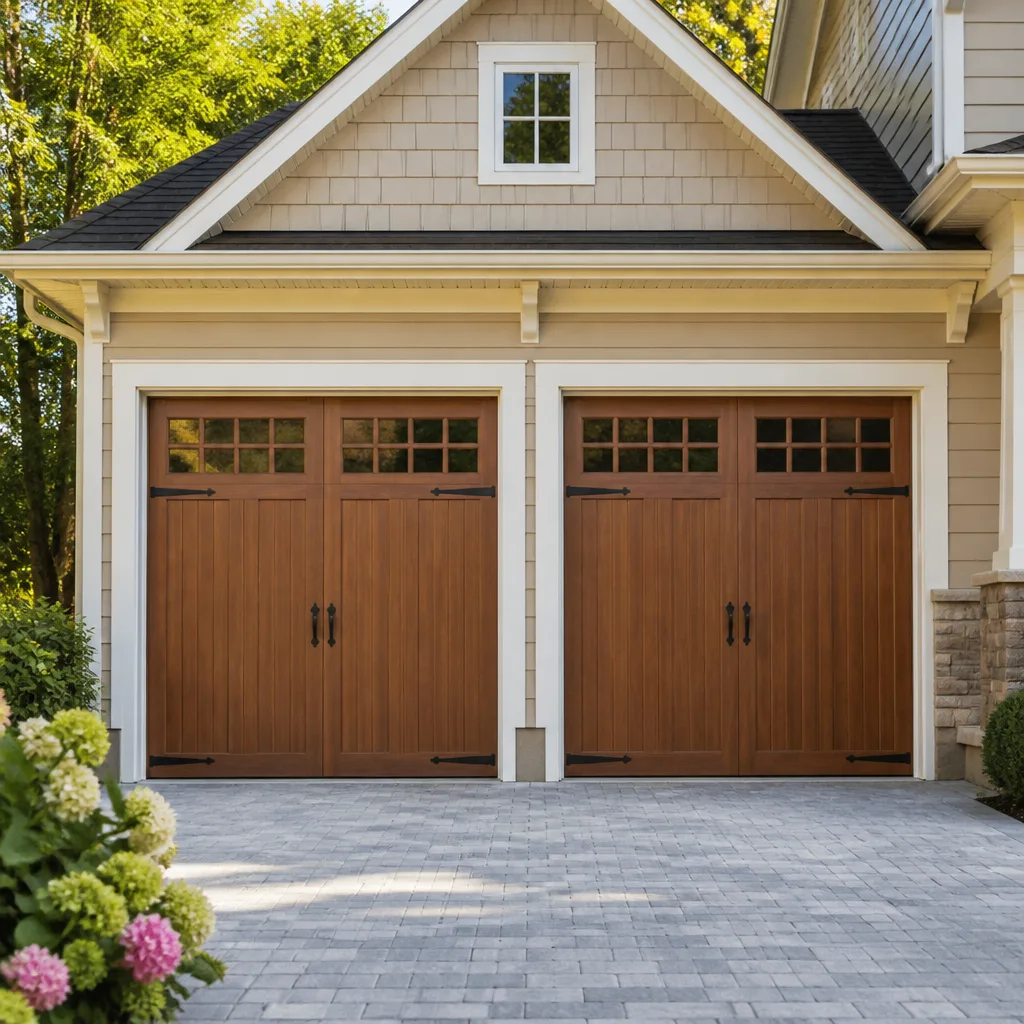 Carriage house
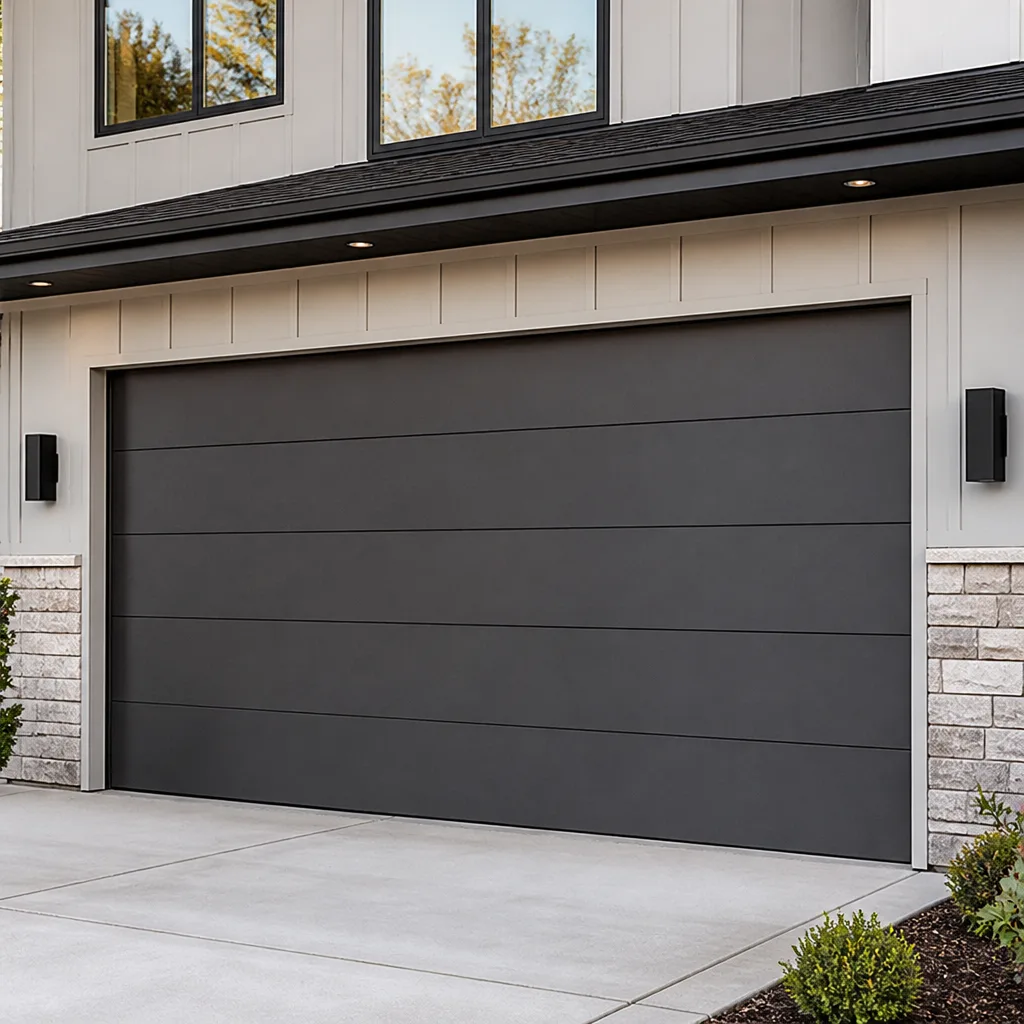 Modern flush
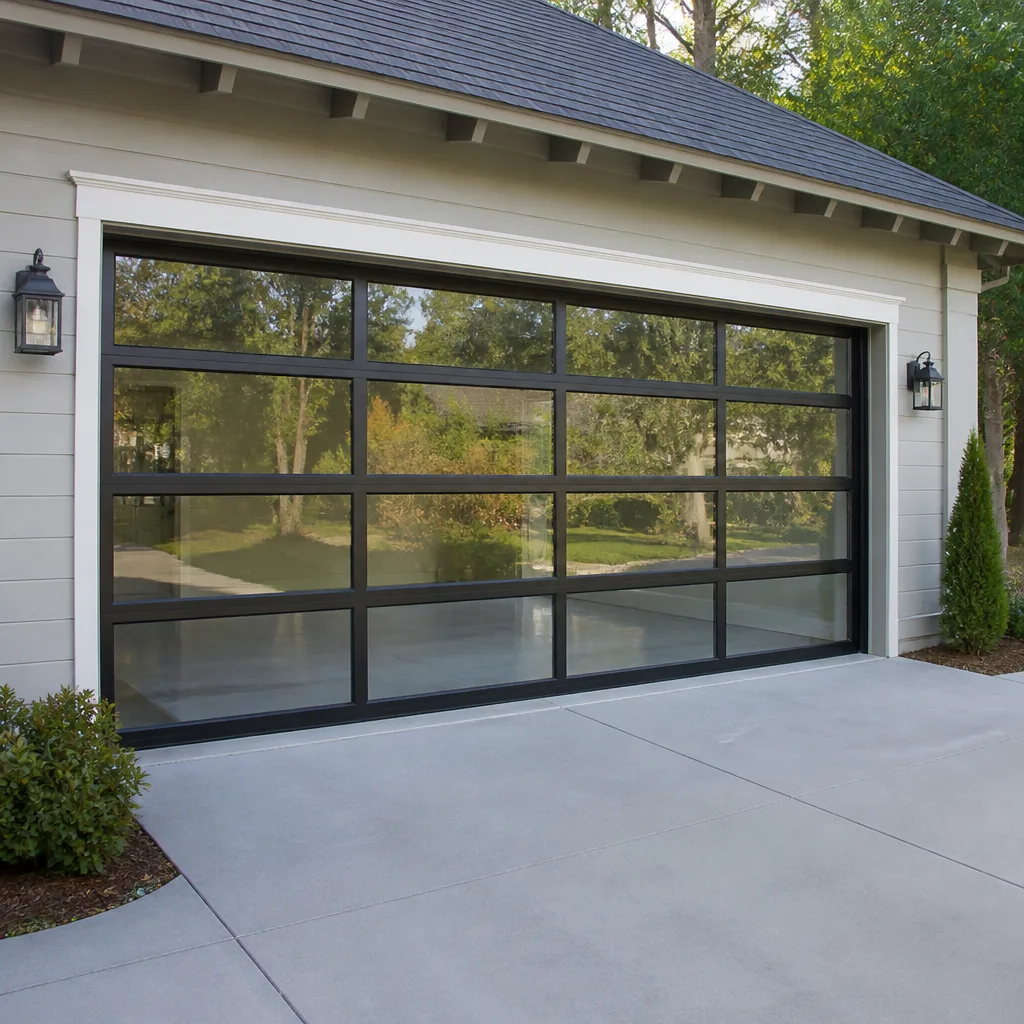 Full-view glass
 LiftMaster openers
 Chamberlain openers
Full 25-point door and opener safety check with every visit - springs, cables, rollers, tracks, and your LiftMaster or Chamberlain opener included
You get a price before we start. It does not change when the pro arrives.
Get your free estimateGarage Door Warning Signs: A Seminole Heights Homeowner’s Reference Guide
Most warning-sign lists tell you what to do when the door won’t open. That’s too late. The signals that actually matter show up weeks earlier: a two-second hesitation before the door moves, a faint grinding that wasn’t there last month, a gap at one corner you can see daylight through. A garage door that hesitates before moving isn’t “just getting old” – it’s often a spring that’s 30 to 60 days from failing under load. Because the torsion spring above your door holds the entire weight of the panels, a failing spring is a mechanical clock running down, and the warnings come well before it stops. This guide covers the early signals Seminole Heights homeowners misread, what each one predicts, and how much time you have.
Quick Answer
The most common early garage door warning signs are a delayed or jerky start, uneven gaps at the bottom corners, grinding or popping sounds, and rust or a visible gap in the coil of the spring above the door. Slow starts and spring rust usually mean a scheduled repair within a few weeks; a snapped cable, a bent track, or a door that comes down unevenly means stop using it and call a professional. Our technicians have up to 15 years of experience reading these signals, and we work on the brand already in your garage.
Styles & brands we work with
- Raised-panel steel
- Carriage house
- Modern flush
- Full-view glass
- LiftMaster openers
- Chamberlain openers
Table of Contents
- Why does my garage door hesitate before it moves?
- What does an uneven gap at the bottom of the door mean?
- How do I tell opener noise from hardware noise?
- Why does my opener act up in Florida heat?
- What can I safely check on the spring from a distance?
- Which signs mean stop now, and which can wait?
- How much runway do I have before the door fails?
- What does warning-sign repair typically cost in Seminole Heights?
Why does my garage door hesitate before it moves?
A pause of a second or two between pressing the button and the door moving is the single most misread signal on a garage door. Homeowners in Seminole Heights tend to file it under “old door, still works.” In our experience, hesitation is usually a spring losing tension or a logic board slow to respond, and both get worse, not better, with time.
The spring is the likeliest culprit. On a torsion system, the spring above the door carries the door’s weight and the opener only guides it. As the spring weakens, the opener has to lift more of that weight from a dead start. The motor strains, the door lurches, and the delay grows a fraction of a second at a time. A door that hesitates for two seconds today may hesitate for five seconds in a month.
If the pause is paired with a click and no movement at all, the problem is more likely electrical: a failing capacitor, a worn gear inside the opener, or a safety sensor knocked out of alignment. That distinction matters, because it changes whether you’re looking at spring work or garage door opener repair.
What to check yourself, safely:
- Listen. A single click then silence points to the opener. A hum then movement points to the spring or rollers.
- Look at the safety sensors at the bottom of the tracks. A small indicator light on each sensor should be steady, not blinking.
- Press the wall button instead of the remote. If the wall button works instantly and the remote doesn’t, the opener is fine and the remote or receiver needs attention.
What not to do: don’t adjust the spring or the cables yourself. The torsion spring holds the full weight of the door under tension, and releasing it without the right tools and training can cause serious injury. That work belongs to a trained technician.
What does an uneven gap at the bottom of the door mean?
An uneven gap at the bottom of a garage door has three likely causes, and they’re not equally serious. The gap might be a track knocked out of alignment, a foundation that has shifted, or a warped bottom panel. Knowing which one you’re looking at tells you whether you’re scheduling a quick adjustment or facing a bigger repair.
Track alignment is the most common. A track that’s been bumped, or one that has slowly worked loose from its brackets, pulls the door slightly off true. The result is a wedge-shaped gap, wider on one side. Tracks can often be realigned and re-anchored, which is a straightforward service call.
Foundation shift is the one homeowners miss. Seminole Heights has a lot of older homes, and concrete settles over time. If the floor slab under one side of the door has dropped a fraction of an inch, the door can sit square while the floor beneath it doesn’t. That gap stays consistent no matter how many times the door is adjusted. A technician can usually tell the difference by watching how the gap behaves as the door closes.
Panel warping shows up as a gap that changes with the weather or the time of day. A wood or insulated panel that has absorbed moisture can bow and lose its straight edge. In that case, adjustment won’t fix it; the panel needs replacement.
How to tell them apart without tools:
- Close the door fully and look at the gap from inside the garage.
- Note whether the gap is a wedge (one side wider) or a consistent strip across the whole width.
- Watch the gap over a few days. If it changes with humidity or temperature, suspect the panel.
- Look at the track brackets where they meet the wall. Loose bolts or rust streaks are a sign of movement.
A gap that lets in water also lets in pests, and in a Seminole Heights summer that means both. A sealed door protects the garage and everything stored in it.
How do I tell opener noise from hardware noise?
The kind of noise your garage door makes diagnoses the problem faster than almost anything else. Grinding, popping, and squealing each point to a different component, and a homeowner who can name the sound saves a service call spent on guesswork. Here’s how to separate the opener from the door hardware.
Grinding usually comes from the opener’s internal gears or from dry rollers in the tracks. If the sound comes from the motor housing at the ceiling, suspect the opener. If it comes from the tracks or hinges, suspect the hardware.
Popping is often the torsion spring. A spring that’s slipping or has a small crack in the coil can make a sharp pop as the door moves. Popping can also come from a cable jumping its drum, and that’s a stop-now signal.
Squealing is almost always friction: dry rollers, dry hinges, or a track that’s rubbing. It’s the least urgent of the three, but it’s a good early warning that lubrication and adjustment are overdue.
Rattling points to loose bolts and brackets. Left alone, a loose bracket can pull free and let the track move.
To isolate the source, stand in the garage and listen with the door closed, then again with it opening. If the noise starts before the door moves, it’s the opener. If it starts as the door begins to travel, it’s the hardware. That simple test is one of the fastest ways to sort opener noise from door noise.
Proper lubrication of rollers, hinges, and the torsion bar is routine maintenance, and it quiets most squeals without a repair. If the noise returns within weeks of lubrication, something is wearing and needs replacing rather than greasing.
Why does my opener act up in Florida heat?
Florida heat is hard on garage door openers, and Seminole Heights garages run hot. A garage with no ventilation can get hot enough that the opener’s logic board drifts out of its normal operating range. When that happens, the board can behave erratically: the door stops halfway, the opener loses its travel settings, or it refuses to respond until the garage cools down.
This pattern is easy to spot. An opener that works first thing in the morning and fails in the afternoon is almost certainly a heat-related board issue rather than a mechanical one. The same opener that works fine in cooler weather but acts up every summer is showing the same pattern. Heat stress is cumulative; the board doesn’t recover, it degrades.
Certain brands are more prone to this because their logic boards are mounted in a way that traps heat, and the fix depends on the model. That’s one reason we certify on eight of the most widely installed brands, including LiftMaster, Chamberlain, Genie, Clopay, Amarr, Wayne Dalton, Craftsman, and Raynor. When we arrive, we diagnose the board in the opener you actually have, not a generic replacement. We work on the brand already in your garage.
Signs your opener is heat-stressed:
- It works reliably in the morning and stops working late in the day.
- The door reverses on its own for no visible reason.
- The opener beeps or flashes a diagnostic code and stops.
- Travel limits drift, so the door doesn’t close fully or slams shut.
If your opener shows these signs, a board swap or a full opener replacement may be the answer. Both are included in garage door repair, and we’ll tell you which one makes sense for the age of your unit.
What can I safely check on the spring from a distance?
You can inspect your garage door spring from a distance without ever touching it, and that inspection catches most spring failures before they happen. The key is to look and not touch. Torsion springs are under extreme tension, and adjusting or removing one yourself is dangerous.
Stand a few feet back and look at the spring above the door. Here’s what to look for, in order of how much warning it gives you:
- Rust. Orange or brown streaks on the coil are a sign the wire is degrading. Rust weakens the wire from the outside in.
- Gaps in the coil. A torsion spring should look like a tightly wound, even coil. If you see a visible gap between windings, the spring is losing tension.
- Stretching. A spring that looks longer than it should, or has a loose, uneven wind, is nearing the end of its life.
- Cracks. A hairline crack in the wire is a serious warning. Even a small crack means the spring can fail without further notice.
- Oil or dark residue. Worn springs sometimes leave a dark line or residue where the coil rubs. It’s not proof of failure, but it’s a reason to have the spring checked.
What you can’t safely check is the spring’s tension or the condition of the cables. If the spring looks fine but the door feels extra heavy when you lift it by hand (with the opener disconnected), the spring has already lost tension. If the door feels light, the spring is likely still under load.
Here in Seminole Heights, our warm, humid climate speeds up corrosion on spring wire. A spring that might last years in a drier climate can rust noticeably faster in a garage that’s open to humid air. Checking the coil every few months is a habit worth keeping.
Which signs mean stop now, and which can wait?
Not every warning sign means call immediately. Sorting the urgent from the scheduled is the difference between a safe repair and a dangerous one. Some of these signs mean stop using the door today; others mean book a repair within the next few weeks.
These signs mean stop now. Don’t open or close the door:
- A snapped cable. A loose cable can whip with serious force. Don’t touch it, and don’t run the opener.
- A bent or badly bowed track. The door can come off the track and fall.
- A door that hangs unevenly. If one side sits lower than the other, the door is off balance and can bind or drop.
- A spring that has already broken. The door will be extremely heavy; don’t try to lift it.
- Any grinding or scraping that wasn’t there before. Stop and have it checked.
These signs allow a scheduled repair within a reasonable window:
- A slow or hesitant start.
- An uneven gap at the bottom that’s small and stable.
- Squealing or rattling during travel.
- Surface rust on the spring with the coil still even.
- Opener noise that comes and goes.
Spring work and cable work are high-risk tasks. The tension in a torsion spring can cause severe injury if released without the right training and tools. That’s why spring replacement is a core service here rather than a referral, and why our technicians have up to 15 years of experience doing it.
If you’re not sure which list your door falls into, err on the side of caution and get it looked at before you use it again.
How much runway do I have before the door fails?
“How much time do I have?” is the question Seminole Heights homeowners ask most when they call about a warning sign. The honest answer depends on the sign. Some failures give you weeks of notice; others give you none.
Here’s how much runway each common warning sign typically gives you:
- Hesitation or slow start: usually a few weeks to a couple of months, but the strain on the opener compounds. Waiting often turns a spring repair into a spring plus opener repair.
- Spring rust or small coil gaps: weeks to a few months, depending on how fast the wire is degrading. In humid summer weather, expect the shorter end.
- Squealing or rattling: months of usable life, but the friction wears the rollers and hinges faster the longer it goes.
- Small, stable bottom gap: months if it’s a panel or floor issue, weeks if it’s a track slowly working loose.
- Snapped cable, bent track, or uneven hang: zero runway. Stop using the door now.
The pattern is that cheap warning signs, addressed early, stay cheap. The slow-start hesitation that gets ignored becomes a spring that snaps under load, and by then the opener has been straining against a door it can’t lift. That’s the difference between a scheduled repair and a second service call.
The clearest sign to act now, rather than wait, is any change that’s getting worse from week to week. A gap that widens, a sound that gets louder, a pause that gets longer – these are not going to reverse on their own.
What does warning-sign repair typically cost in Seminole Heights?
Most warning-sign repairs in Seminole Heights fall between about $120 and $340, depending on the cause and the parts involved. A single spring replacement typically runs $180 to $340. That range is for one spring; when a matched pair is replaced together, which is common practice, the pair costs roughly twice that. These are typical estimates, and the written estimate you receive is the price.
Here’s the breakdown by warning sign:
| Warning sign | Typical estimated cost | What’s usually involved |
|---|---|---|
| Hesitation / slow start | $150 – $340 | Spring or opener diagnosis and repair |
| Spring rust / coil gap | $180 – $340 per spring | Torsion or extension spring replacement |
| Uneven bottom gap | $120 – $260 | Track adjustment, bracket tightening, panel check |
| Grinding / popping / squealing | $120 – $280 | Lubrication, roller replacement, opener gear or board repair |
| Opener heat issues | $180 – $340 | Logic board swap or opener replacement |
Every repair starts with a diagnosis. A technician looks at the door, listens to it move, and checks the spring and cables before quoting anything. You get a price, you agree to it, and the work starts. Nobody should be handed an invoice that doesn’t match the quote.
Parts availability also affects the price and the timeline. Because we supply garage door parts directly as a service, we can often have the right component on hand rather than asking you to wait for a special order. That matters most when the part is a spring or a board that’s specific to your brand. We’d rather diagnose the actual problem once, fix it, and not have you call back a week later.
Call (877) 757-4452 for an exact quote – estimates are free.
Common Mistakes to Avoid
- Assuming a slow start is just age. A door that hesitates is warning you about the spring or the opener, and the warning is cheaper to fix than the failure. Have it checked before the pause turns into a snap.
- Trying to adjust the spring yourself. Torsion springs hold the full weight of the door under tension. Releasing one without the right tools and training can cause severe injury, so call a professional for anything beyond a visual inspection.
- Ignoring a small gap at the bottom corner. A gap that lets in water, pests, and heat in a Seminole Heights summer also tells you the door isn’t sealing or sitting true. Catch it early and it’s an adjustment; wait and it can become a panel or track repair.
- Greasing away a grinding sound instead of fixing it. Lubrication quiets a squeal. If the noise comes back within weeks, something is wearing out, and grease won’t stop it.
- Overlookinng the opener in a hot garage. An opener that fails every afternoon isn’t a mystery – it’s heat stress on the logic board. Treating it as a mechanical problem wastes a service call.
- Running the door after a cable snaps or a track bends. A loose cable can whip, and a bent track can let the door fall. Stop using the door and call.
- Calling a generalist for a spring or opener job. Spring and opener work take brand-specific knowledge. A technician who works on the brand already in your garage diagnoses it right the first time.
See the difference
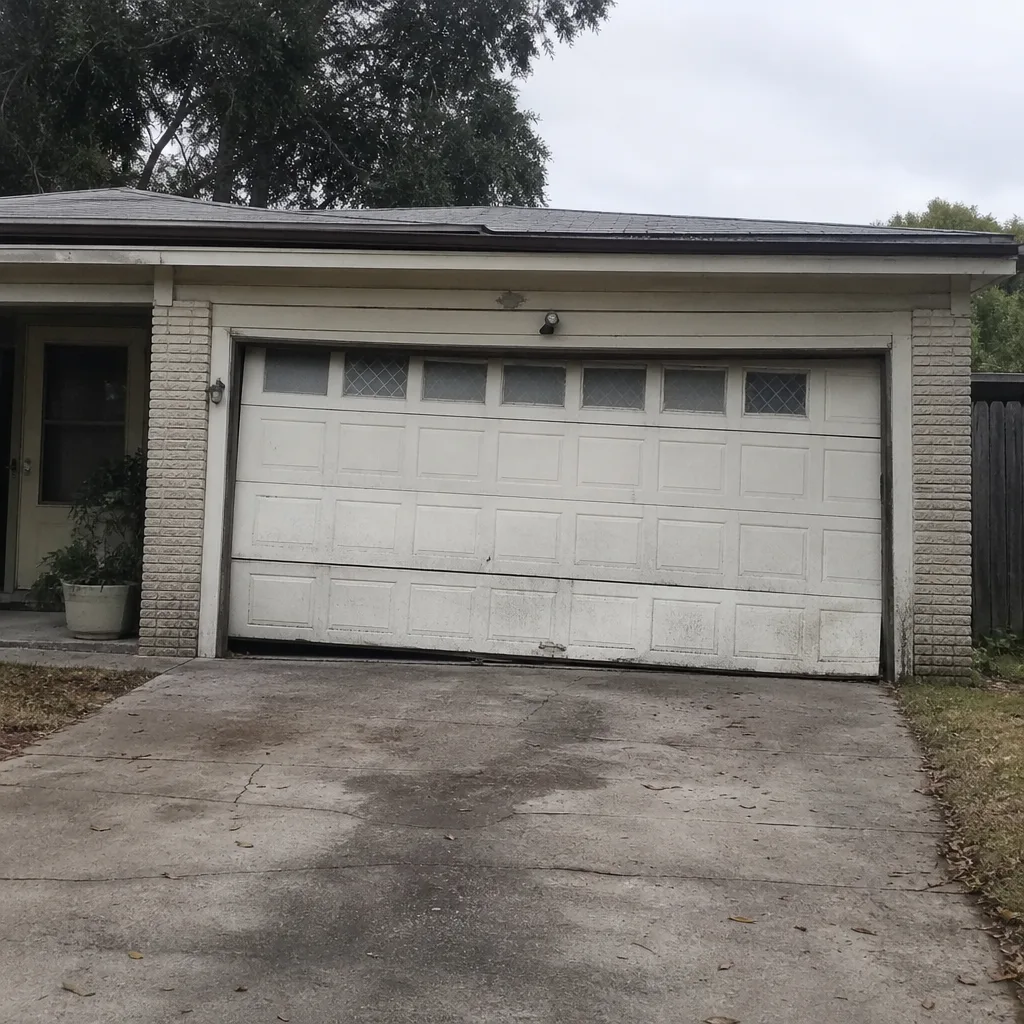 Before
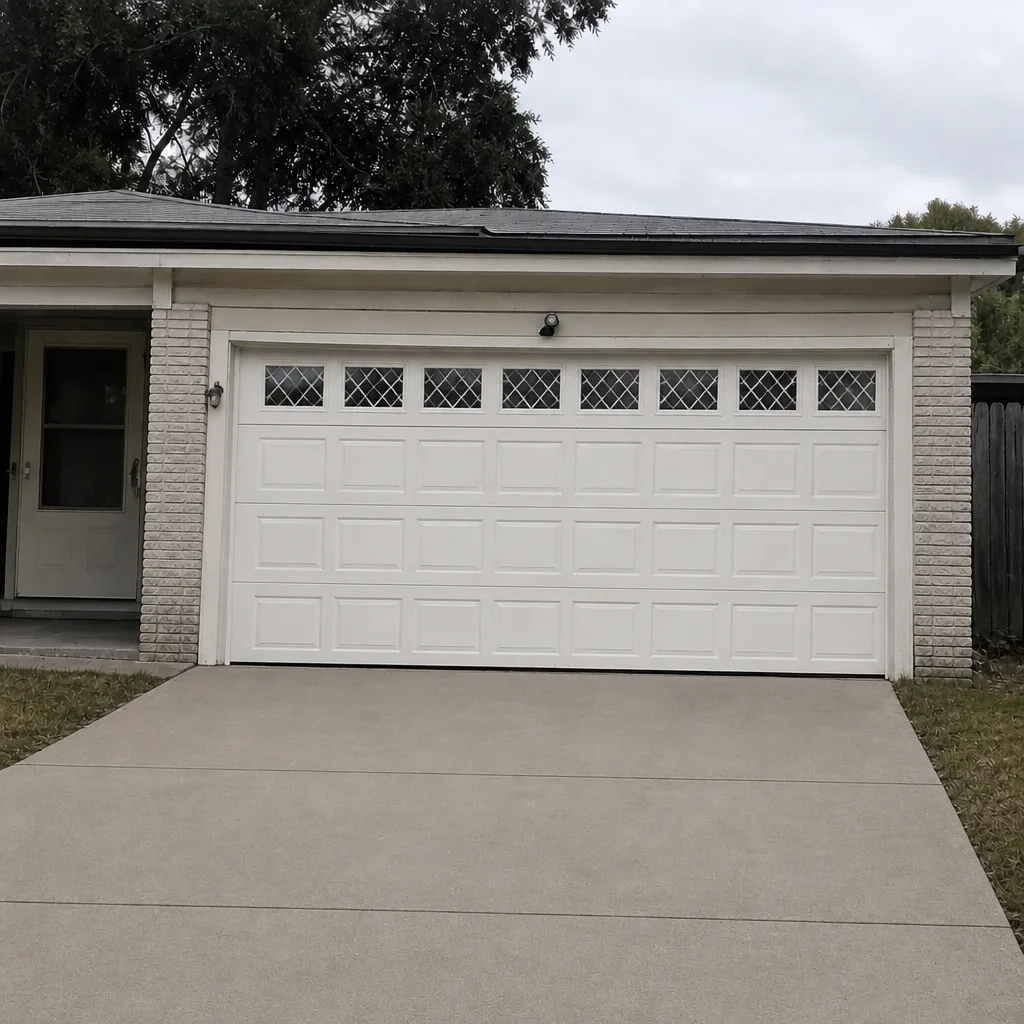 After
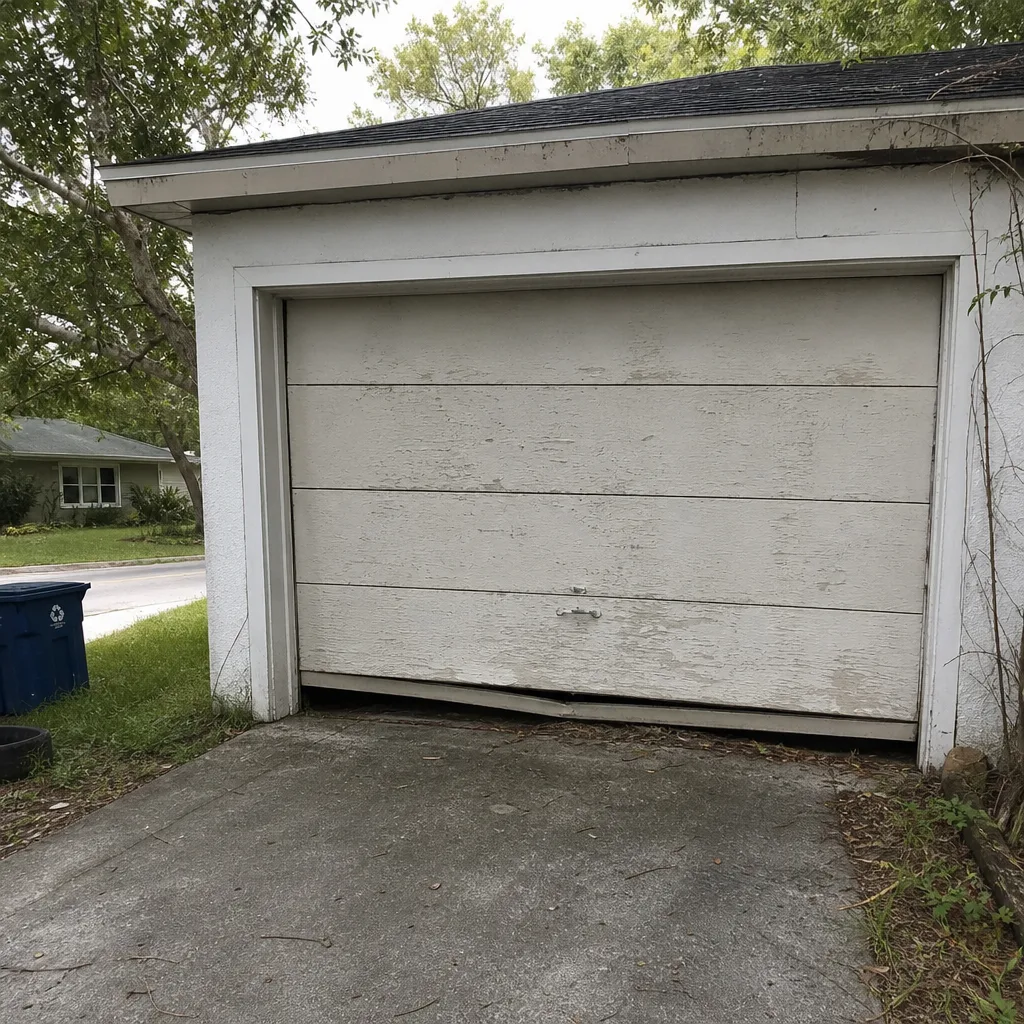 Before
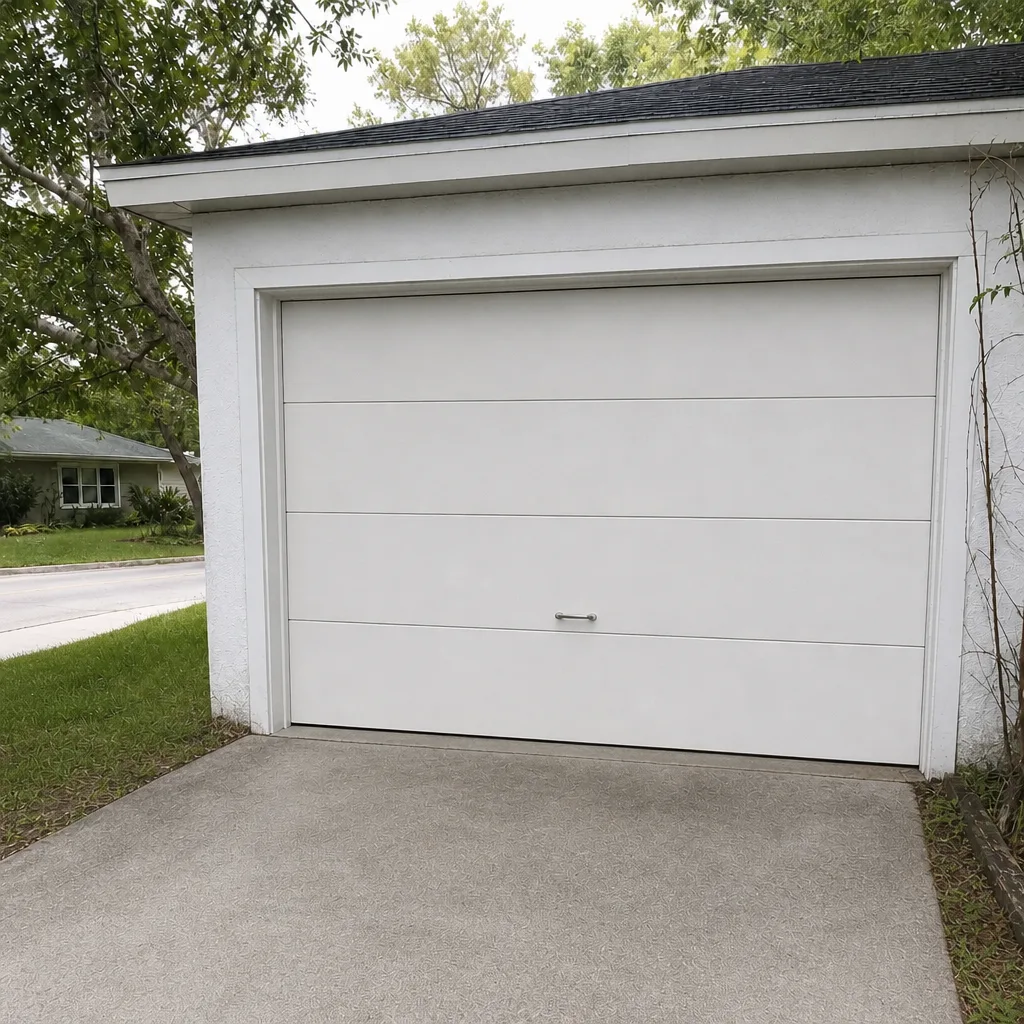 After
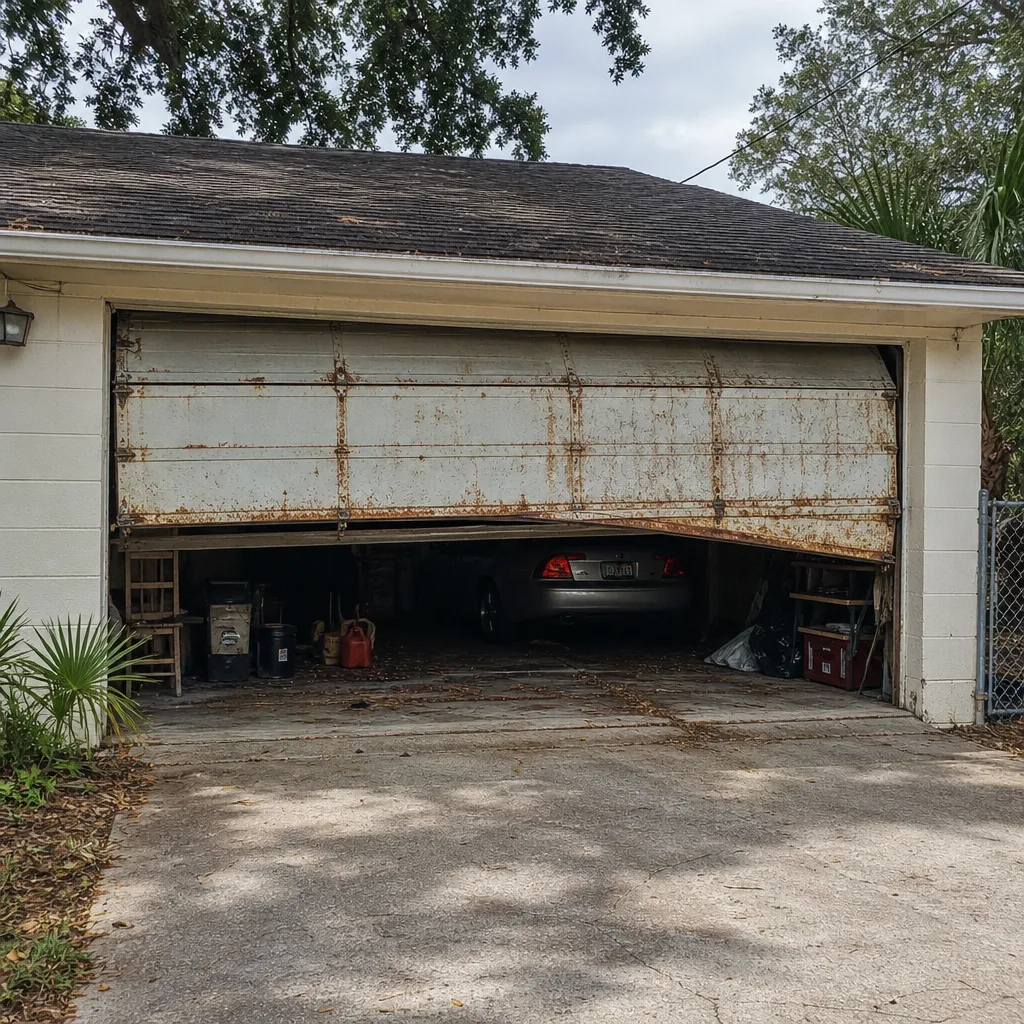 Before
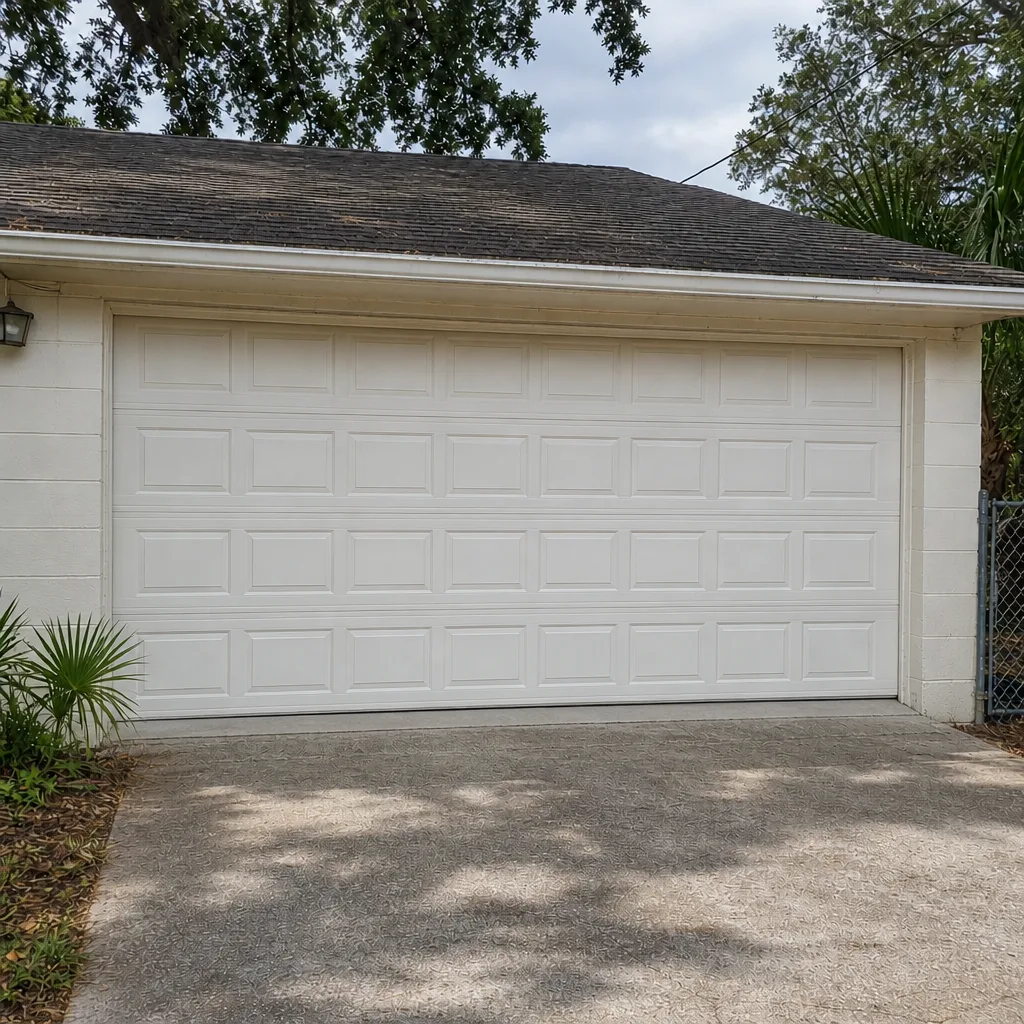 After
When to Call a Professional
Call a professional when the door won’t open or close, when you hear a snap, or when a cable, track, or panel looks bent or hanging. Call immediately if the door sits unevenly or the opener strains against a door that feels too heavy to lift by hand. Those are the safety-critical signs. For everything else – a slow start, a small gap, rust on the coil, intermittent opener noise – schedule a repair within the next few weeks rather than letting it go. Early repair keeps the cost in the estimate range and avoids a second service call. Garage Door Repair Seminole Heights offers free estimates in Seminole Heights – call (877) 757-4452. For a new door or a full replacement, we offer a free measure and a written price rather than a same-day promise, because that work is measured and ordered.
Frequently Asked Questions
A slow or hesitant start is the most common early warning sign. It usually points to a spring losing tension or an opener that’s straining, and both get worse with time. Call (877) 757-4452 for an exact quote – estimates are free.
Single spring replacement in Seminole Heights typically runs $180 to $340, and a matched pair usually costs about twice that because both springs are replaced together. The written estimate you agree to is the price. Call (877) 757-4452 for an exact quote – estimates are free.
You can inspect the spring from a safe distance – look for rust, visible gaps in the coil, stretching, or cracks – but you should never touch or adjust it. Torsion springs are under extreme tension and can cause severe injury. Our technicians have up to 15 years of experience with spring work, and we handle it as a core service.
No. The price is quoted and agreed before any work starts, and the written estimate is the price. If a technician finds an unrelated problem during the visit, they explain it and quote it separately; nothing gets added to your bill without your agreement.
An opener that fails in the afternoon and works in the morning is showing heat stress on its logic board. Seminole Heights garages get hot, and certain opener brands are more prone to board stress in heat. The fix depends on the model, which is why we service eight major brands, including Chamberlain, Genie, and LiftMaster.
The local professionals we connect you with are licensed and insured as their state requires. They’re experienced with the major brands, including Amarr and Wayne Dalton, so the diagnosis matches the system you actually have. Call (877) 757-4452 for an exact quote – estimates are free.
The Bottom Line
The warning signs that matter on a garage door are the early ones: a two-second hesitation, a faint grinding, a small gap at one corner, rust or a gap in the coil above the door. Each one points to a specific component, and each one comes with a window – usually weeks to months – before the door becomes unsafe or stops working. A snapped cable, a bent track, or an uneven hang means stop now. Addressed early, most of these repairs stay within a typical estimate range and keep the door running properly. Ignored, they turn into a bigger repair and a bigger bill. If something on your door has changed and stayed changed, don’t wait for it to snap. Call (877) 757-4452 for a free estimate and get the door looked at by a technician who works on the brand already in your garage. For a new door, ask about a free measure and a written price. Either way, one call covers it.
Written by the team at Garage Door Repair Seminole Heights.