Last updated November 22, 2026
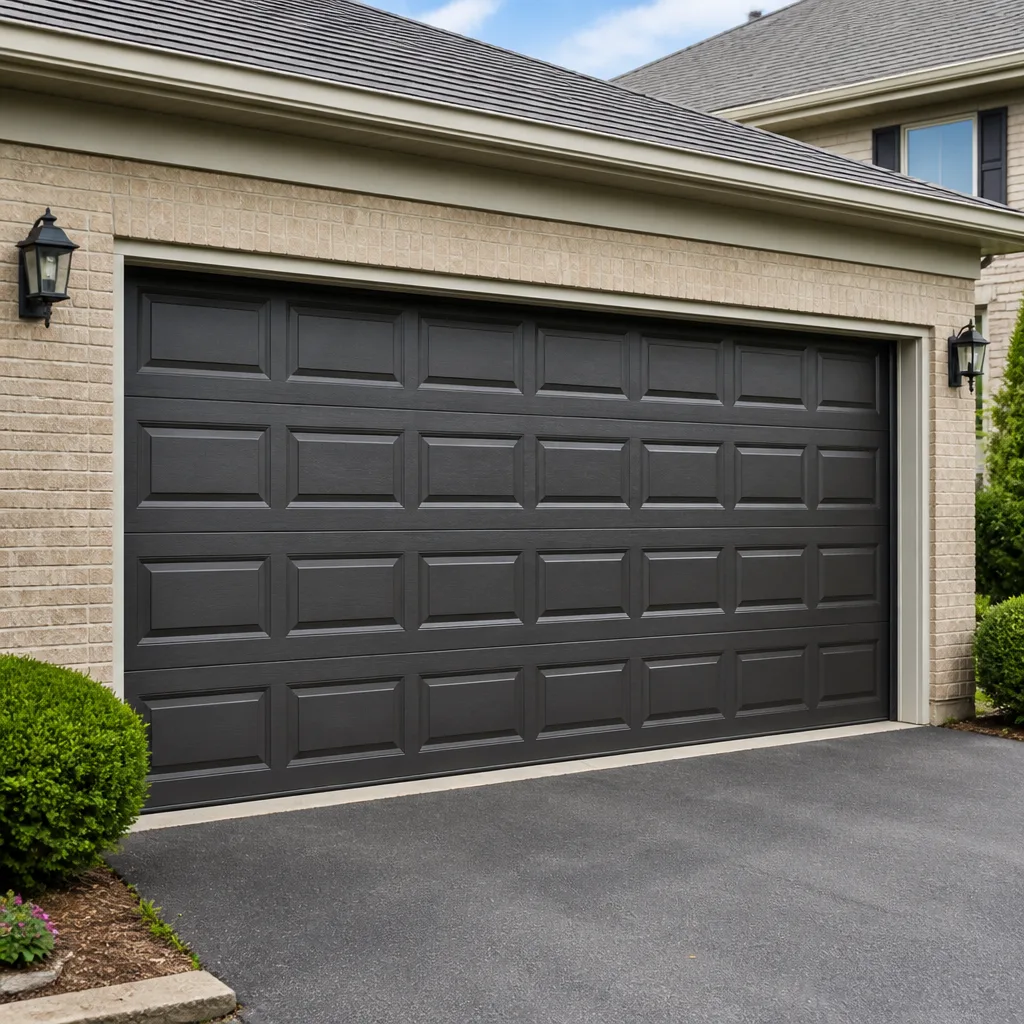 Raised-panel steel
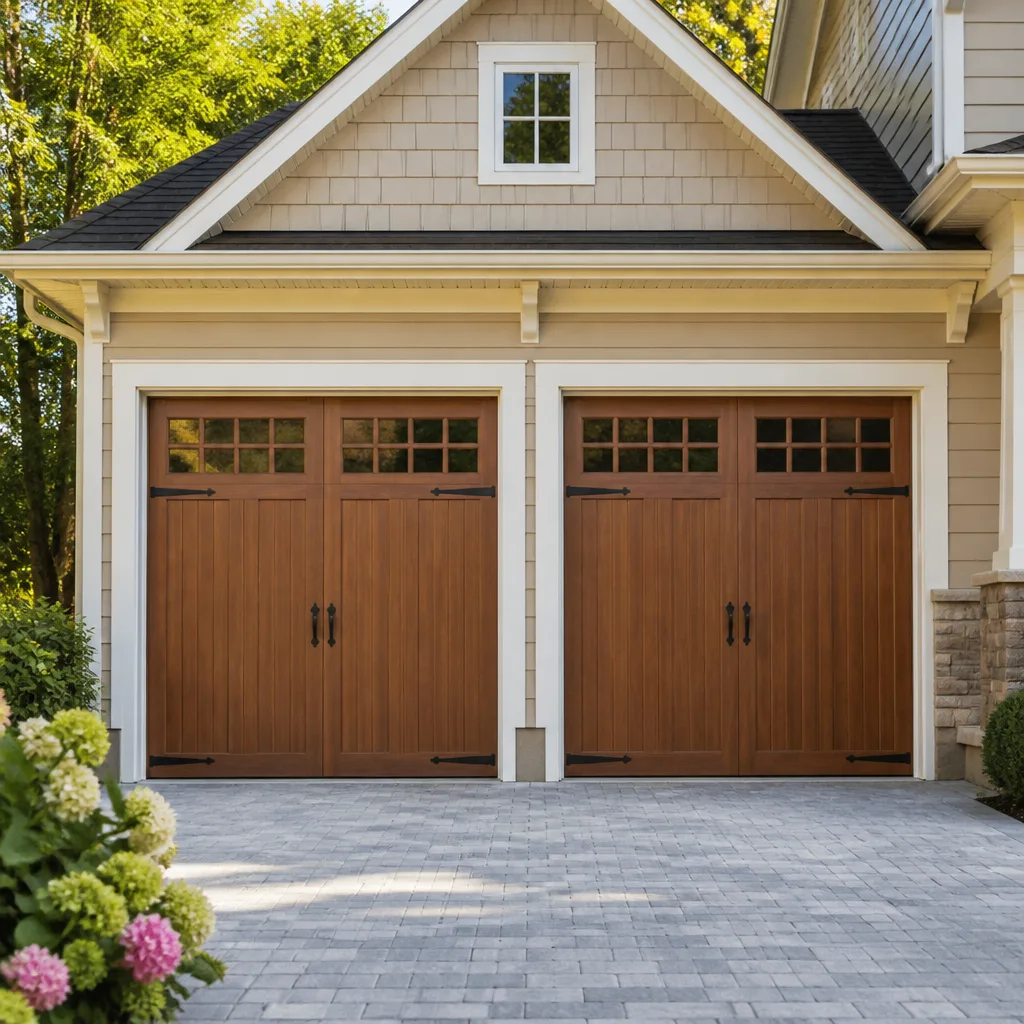 Carriage house
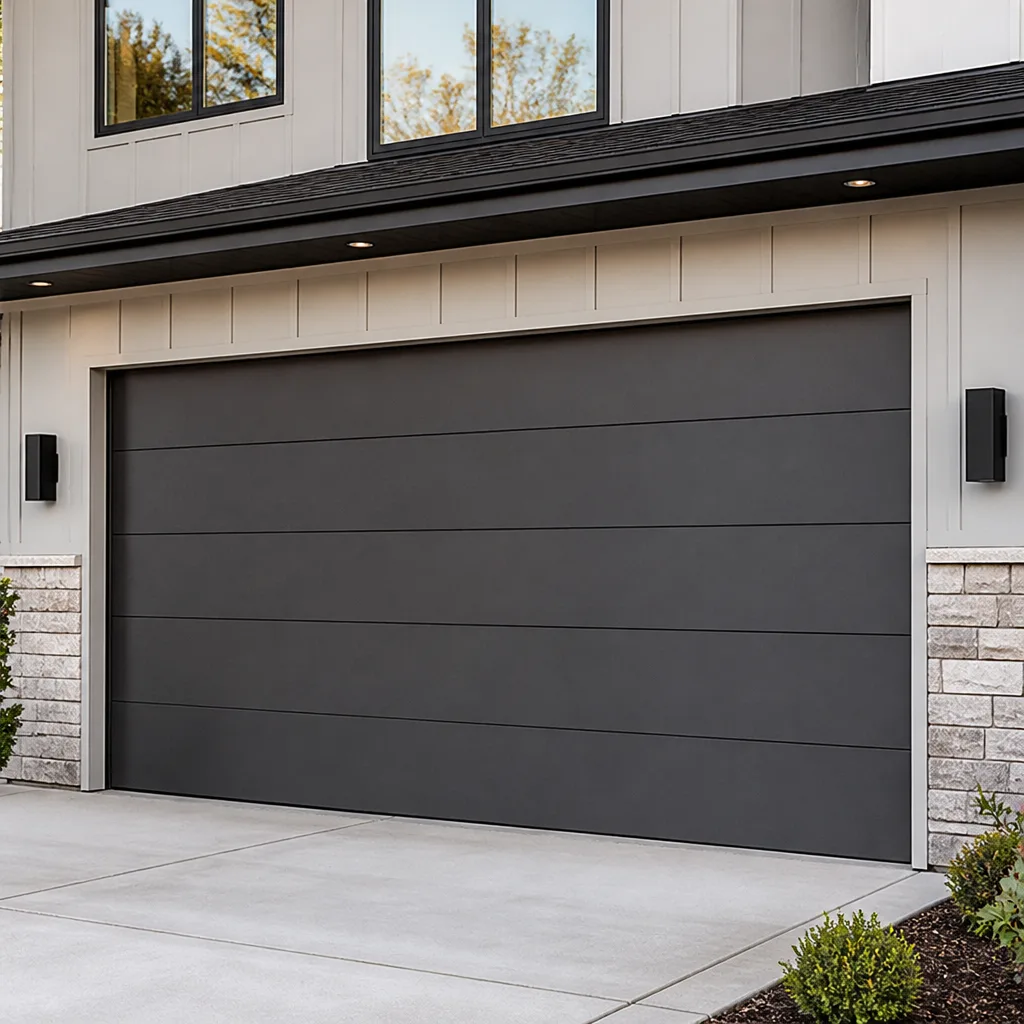 Modern flush
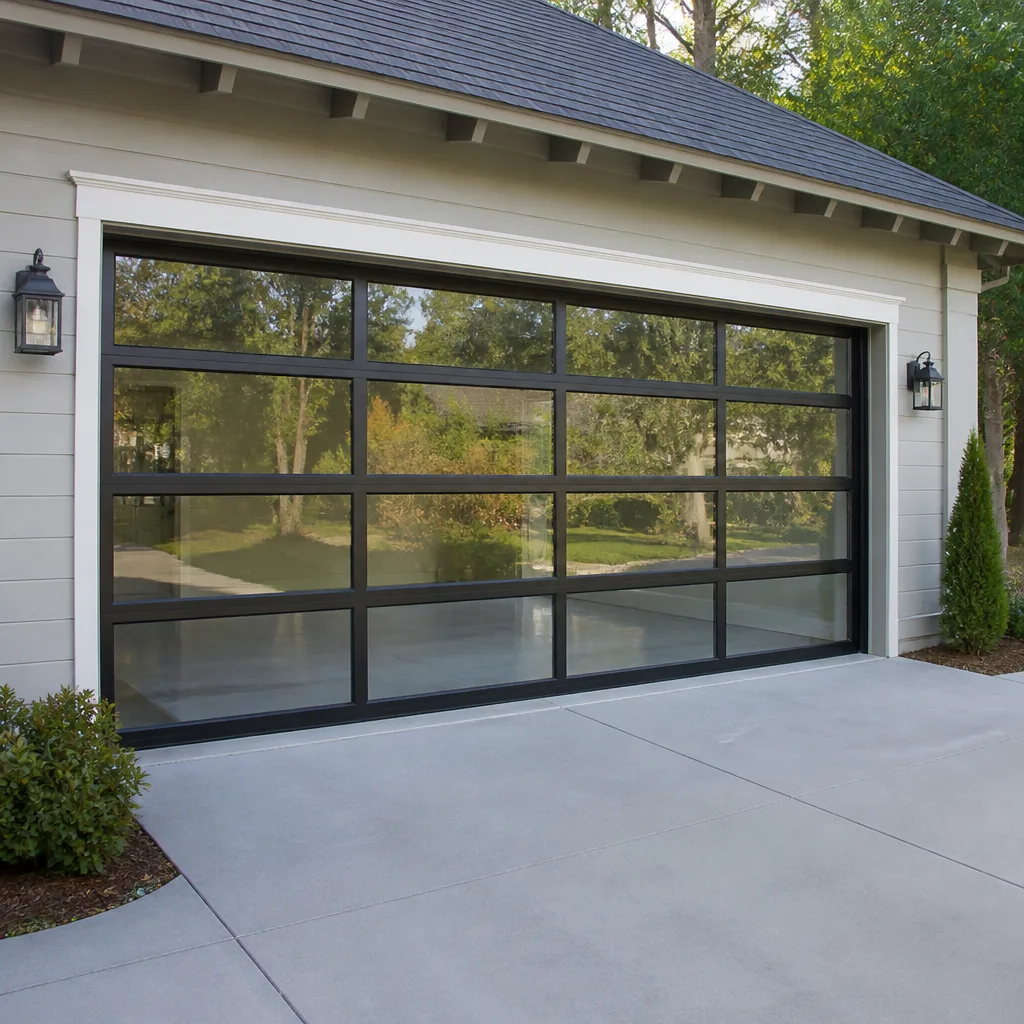 Full-view glass
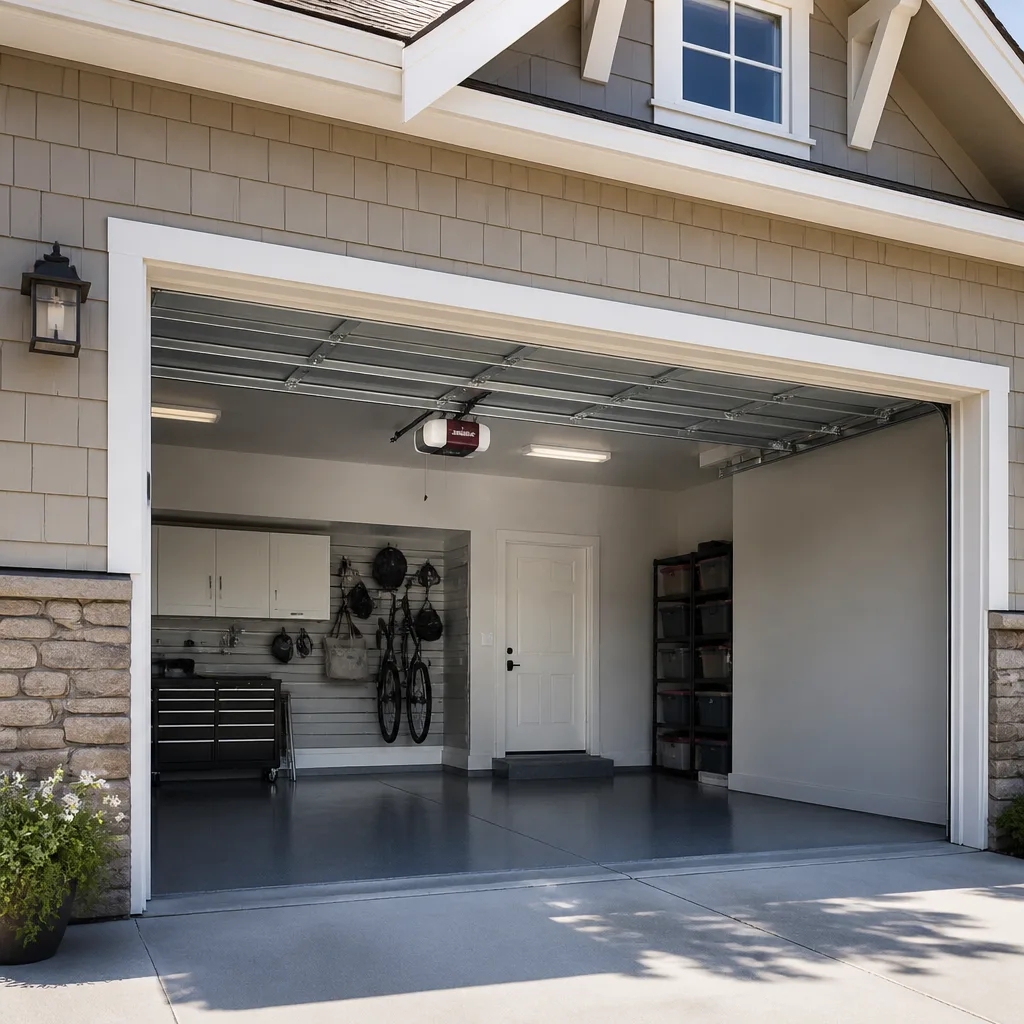 LiftMaster openers
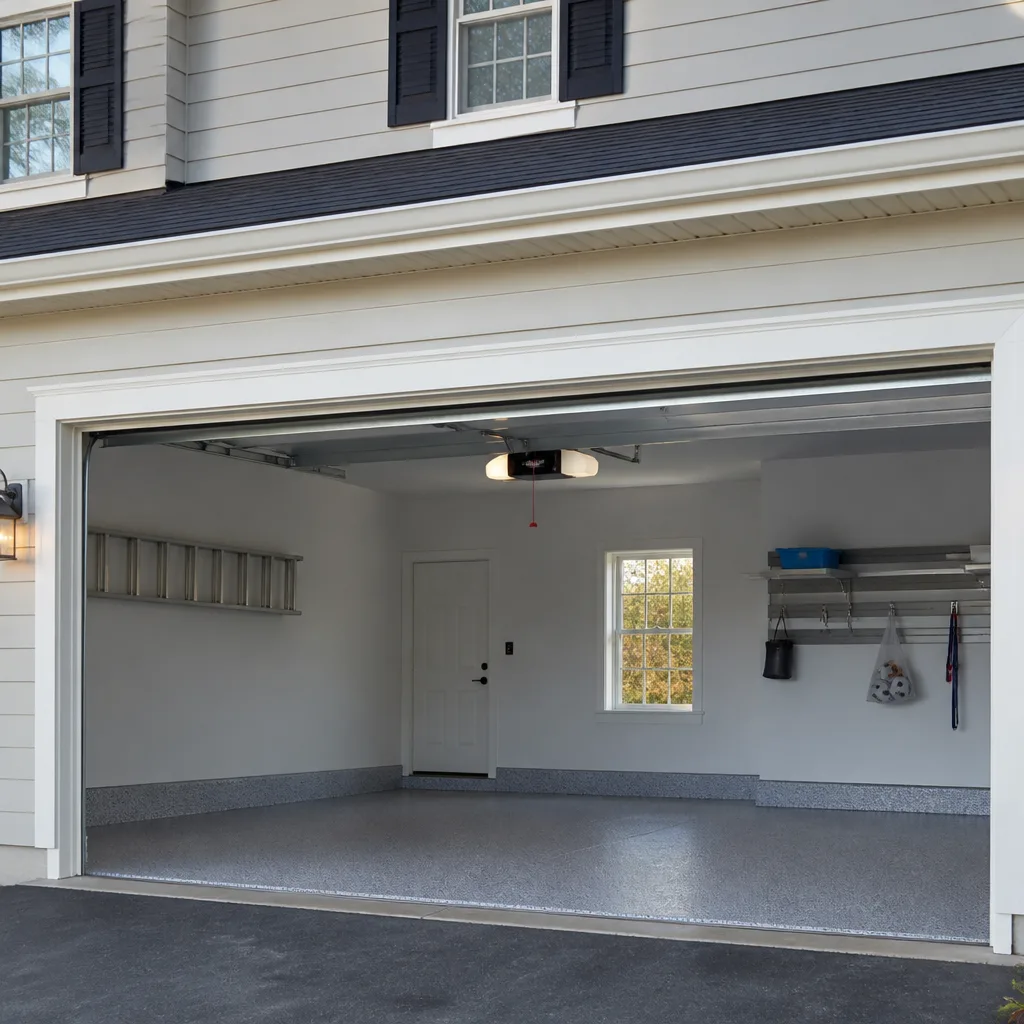 Chamberlain openers
Full 25-point door and opener safety check with every visit - springs, cables, rollers, tracks, and your LiftMaster or Chamberlain opener included
You get a price before we start. It does not change when the pro arrives.
Get your free estimateDIY vs Professional Garage Door: The Seminole Heights Homeowner’s Decision Guide
Replacing a bottom seal is a reasonable Saturday project. Adjusting torsion spring tension is how people end up in the ER, and the difference isn’t strength or tools. It’s stored mechanical energy measured in foot-pounds. A garage door is the heaviest moving object in most homes, and Florida law, manufacturer warranties, and the building code each draw a line around what a homeowner can safely and legally do to it. This guide draws that line task by task, not door by door, so you know exactly where your skills help and where they put you, your warranty, or your permit at risk. We’ve walked Seminole Heights homeowners through this exact decision many times, and the answer is almost never “all DIY” or “all pro.” It’s specific.
Quick Answer
In Seminole Heights, weatherstripping, sensor alignment, lubrication, remote reprogramming, and visual inspections are safe, sensible DIY tasks. Spring work, cable replacement, panel and track replacement, full door installation, and opener installation are jobs for a trained professional, because they carry injury risk, permit requirements, or warranty consequences that a homeowner can’t absorb. Anything involving torsion springs should be handled by a trained technician, full stop.
Styles & brands we work with
- Raised-panel steel
- Carriage house
- Modern flush
- Full-view glass
- LiftMaster openers
- Chamberlain openers
Table of Contents
- What Florida Law Actually Lets Homeowners Do
- Why Torsion Springs Are Different From Every Other Repair
- DIY Installation, Permits, and the Inspection Question
- The Hidden Cost of DIY Opener Installation
- The Tasks That Are Genuinely Good DIY Candidates
- How Seminole Heights Weather Affects the Decision
- What Professional Work Costs and How to Judge the Quote
- When DIY Stops Making Sense
What Florida Law Actually Lets Homeowners Do
Florida doesn’t license garage door installers as a separate trade the way it licenses electricians or plumbers, and there’s no state statute that says a homeowner can’t touch their own door. What governs the work is a patchwork of building code, warranty language, and product-specific rules. That’s why the DIY-vs-pro question here isn’t really about a law that says “don’t.” It’s about a set of consequences that attach to specific tasks.
Three things decide whether a task is homeowner territory in Seminole Heights:
- Does it require a permit? Most structural changes to a garage door, including full door replacement and major track or header work, fall under the Florida Building Code and require a permit through the local building department. A permit means an inspection, and an inspection means the install has to pass.
- Does it void the manufacturer’s warranty? Most major brands, including Clopay, Amarr, Chamberlain, and Genie, write installation and repair conditions into their warranty terms. Opening a sealed spring assembly, cutting into a track, or installing an opener without a qualified installer can void coverage on those components.
- Does it carry physical risk? Springs and cables are under tension. A mistake isn’t a call-back, it’s an injury.
A homeowner can perform any repair they choose on their own property, but they also own the outcome: the failed inspection, the voided warranty, the injury. That’s the real legal line. It sits on the risk, not on the trade.
Weatherstripping, seals, lubrication, and sensor alignment fall cleanly on the safe side. Spring replacement, cable replacement, and full door installation fall on the other side. The middle band, opener swaps, panel replacement, and track adjustment, deserves a call to your building department and your door’s manufacturer before you commit. If you’re unsure which side a task falls on, a quick call to a professional shop can save you a second call later.
Why Torsion Springs Are Different From Every Other Repair
Every other garage door repair involves a component at rest or under low tension. Torsion springs are different because they store a large amount of energy when the door is closed and release it as the door opens. That energy has to go somewhere. When a spring is over-wound, cut, or released without a winding bar in place, it goes into whatever is nearby, and the nearest object is usually the person standing beside it.
The injury mechanism is specific. Torsion springs sit on a steel shaft above the door, and adjusting them requires winding bars that fit into the spring’s cone. Winding bars slip. When they do, the spring unwinds in a fraction of a second, and the bar or the spring end strikes whatever is in its path. This is why general handymen avoid spring work and why we treat it as a specialist discipline rather than a general repair.
Extension springs, common on older single-car doors in Seminole Heights, carry the same risk in a different geometry. Instead of a shaft, the energy is stored in a spring that runs along the track. If the spring breaks, the energy releases along the length of the door. It’s why extension springs have safety cables running through them, and why a missing or damaged cable turns a broken spring into a projectile problem.
The practical rule: never attempt to adjust, remove, or replace a torsion or extension spring yourself. This isn’t a case where the risk goes up because you’re inexperienced. The risk exists for anyone without the tools and the training, and it exists at a level no other garage door task comes close to. A technician winding a spring is doing something that can go wrong in a millisecond, and that’s why the task commands the price it does. If your door is struggling to lift or has stopped lifting entirely, that’s the moment to schedule garage door repair in Seminole Heights rather than reach for a wrench.
DIY Installation, Permits, and the Inspection Question
A new garage door is a structural install, not a drop-in replacement. It attaches to the header and the wall framing, it involves a torsion assembly that has to be wound to a specific tension for the door’s weight, and it has to operate safely with the opener’s force limits. All of that is why door installation in Florida typically requires a building permit, and why the permit usually triggers an inspection once the work is done.
Here’s what happens with a DIY install that skips the permit. First, the install itself may pass a visual check but fail on spring tension, balance, or track alignment. A door that isn’t balanced correctly works the opener too hard, which shortens the opener’s life and, in some cases, causes the door to reverse or bind in ways the safety sensors can’t catch. Second, an unpermitted install becomes a disclosure problem if you sell the house. A buyer’s inspector will note it, and you may be asked to bring it up to code on the way out. Third, the manufacturer’s warranty on the door itself may not apply to a homeowner install, depending on the brand and the specific product.
If you’re replacing a door in Seminole Heights and plan to do the install yourself, the correct sequence is:
- Call the local building department and confirm the permit requirement for a residential garage door replacement.
- Confirm the door model you’re buying is rated for homeowner installation and won’t void the warranty.
- Have the opening measured and the spring assembly sized by someone who has the door’s actual weight figures, not an estimate.
- Schedule the inspection before you use the door daily.
In our experience, most Seminole Heights homeowners reach step two and decide the permit work, the spring sizing, and the inspection are more than they want to take on. That’s the point where garage door installation by a professional who handles permits and inspection becomes the simpler path, and the written estimate you get before any work begins is what tells you whether it’s the right one for your door.
The Hidden Cost of DIY Opener Installation
An opener looks like the easiest part of the system to replace. It’s a motor that hangs from the ceiling, and the install guide is 20 pages. What the guide doesn’t tell you is that certain brands, Chamberlain and LiftMaster in particular, build diagnostic and programming features into the opener that only a certified technician can access. If you install the opener yourself, you can still get the door to open and close, but you may lose access to features the opener advertises, and you may void the warranty on the unit.
Three specific ways a DIY opener install costs more than it saves:
- Warranty voiding. Many openers specify that installation must be performed by a qualified technician for the warranty to hold. A homeowner install can leave the motor covered but exclude the control board and accessories.
- Force and travel limit calibration. A new opener has to be set to the door’s actual resistance. Installed with the defaults, the opener works harder than it should, and the safety reverse may not trigger when it needs to.
- Smart features. Wi-Fi and app-connected openers, including most current Chamberlain and LiftMaster models, need to be paired and calibrated correctly. Miss a step and the app shows the door as online when it isn’t, or the opener won’t take a firmware update.
A common pattern we see in Seminole Heights is a homeowner who installs a new opener, gets the door moving, then calls because the safety sensors won’t pair, the app won’t connect, or the door reverses for no reason. At that point, the cost of a technician’s visit is added on top of the opener price, and the warranty question is already open. Get it right the first time with garage door opener repair or a professional install, and you keep the warranty and the features you paid for.
The Tasks That Are Genuinely Good DIY Candidates
There’s a real list of garage door jobs that belong in the homeowner’s column, and they’re the ones with no stored energy, no permit, and no warranty exposure. These are the tasks we tell Seminole Heights homeowners to handle on their own without a second thought.
Best DIY tasks:
- Weatherstripping and bottom seals. The bottom seal wears out first because it takes the brunt of the door’s contact with the floor. Replacing it is a bench job, not a door job.
- Safety sensor alignment. If the door reverses on its own or won’t close, the photo-eye sensors are misaligned or blocked before anything else is wrong. A quick check with a level or a string and a wipe of the lens fixes most of these.
- Lubrication. A garage door has rollers, hinges, and a torsion shaft that benefit from a light application of a garage-door-specific lubricant, kept off the tracks and off the spring.
- Remote and keypad reprogramming. Adding or removing a remote or keypad code is a homeowner task on nearly every opener, from a Genie to a Chamberlain.
- Visual inspection. A monthly check of cables, rollers, springs, and the door’s balance takes two minutes and catches problems before they become service calls.
Not DIY tasks: spring adjustment or replacement, cable replacement, track straightening that requires loosening the track, panel replacement that involves the torsion assembly, and full door or opener installation. These involve stored energy, permits, or warranty exposure.
One more Seminole Heights-specific note: if your door is a wood model with peeling paint, caulk and paint touch-ups are also safe, but check for rot at the bottom corners before you climb up. A soft spot at the bottom rail is a sign the panel needs replacement, and that’s a different job.
How Seminole Heights Weather Affects the Decision
Seminole Heights winters are mild, and that shapes which repairs are worth DIY. There’s no freeze-thaw cycle to crack the door frame, no road salt to corrode the hardware, and no snow load to worry about. The wear pattern here is driven by heat, humidity, and afternoon rain, and each one points at a different task.
Heat is the big one. A garage in Seminole Heights gets hot, and the heat cycles the springs and the opener motor hundreds of times a year. Spring steel under heat and constant tension is the component most likely to fail, and that failure is exactly the one you can’t fix yourself. If your door is a decade old or older, a spring failure is a question of when, not if, and the right response is a service call rather than a parts run.
Humidity is the second factor. It works on the door’s paint, the seal, and the track hardware more than the springs. A door that sticks, screeches, or runs unevenly in the summer often needs nothing more than a seal replacement and a lubrication pass, and both of those are on the DIY list. The tell is whether the door moves smoothly when you disconnect the opener and lift it by hand. If it does, the door itself is fine and the issue is likely in the opener or the seal. If it doesn’t, that’s a door problem, and the balance question needs a technician.
Rain drives the third decision. After heavy rain, check the bottom of the door for water staining and the track for standing water. Water in the track is a sign the seal is worn or the floor has settled under the door, and it’s the kind of issue you can catch on your own before it becomes a rust problem. When it comes to older doors, though, the repeated wet-dry cycle on wood panels is exactly why we steer Seminole Heights homeowners toward professional replacement once the door starts showing soft spots.
What Professional Work Costs and How to Judge the Quote
A professional garage door repair in Seminole Heights is quoted per job, and the quote is agreed before any work starts. That matters more than any single number, because it’s the mechanism that protects you from an invoice that comes in higher than the estimate. Every task on the not-DIY list carries some risk and some permit or warranty question, and a written estimate is the thing that makes that risk visible up front, in writing, before anyone touches the door.
How to judge a quote for the jobs on your list:
- Is it itemized? A quote that says “spring repair, $X” without naming the spring count, the brand, or the labor isn’t a quote. A pair of springs typically costs more than a single spring, so ask for the breakdown.
- Does it match your actual system? A technician who works on the brand already in your garage, whether that’s a LiftMaster opener, a Clopay door, or a Genie unit, is diagnosing the system you have, not substituting a generic part.
- Is the permit fee included for install work? Door replacement and major track work involve a permit and an inspection. Ask whether the quote includes them or expects you to pull them separately.
- Are parts in stock? A quote that includes “parts to be ordered” carries a delay with it. Parts availability as a named service tells you whether the shop can supply the component or has to special-order it.
- Is there a written agreement before work? The quote should be in writing and agreed to before any work begins. If a shop won’t put it in writing, that’s the answer.
The single biggest cost mistake homeowners make is splitting the job across two shops: one to install, one to repair. That creates a finger-pointing problem when something goes wrong, because the installer blames the repair and the repair blames the install. A single shop that covers both avoids that entirely, and a free estimate is the low-risk way to test whether one shop can handle the whole job.
When DIY Stops Making Sense
There’s a clear set of conditions that should end your DIY plans for the day. The door won’t lift or feels unusually heavy, a spring is visibly broken or missing, a cable is frayed or off its drum, the door has come off the track, or the opener keeps reversing and won’t stay closed after you’ve checked the sensors and the seal.
Each of those conditions points at a component that’s under stored energy, under load, or both. A frayed cable is the one homeowners underestimate most. It looks like a wire and it doesn’t look dangerous. But a cable carries the same tension as a spring, and a cable that snaps under load can whip the length of the door. That’s not a homeowner repair, even though it looks like one from the outside.
The other flag is any door that fails an inspection or a balance test. If you disconnect the opener and the door won’t stay where you leave it halfway up, the door is out of balance, and no amount of seal or lubrication work will fix it. That’s the point to stop, because a door that’s out of balance works the opener harder every time and can cause an opener failure on top of the door problem. When in doubt, the safest call is to schedule a technician for the diagnosis and handle the safe tasks on your own list after.
Common Mistakes to Avoid
- Winding a torsion spring with the wrong tool. Winding bars are sized for the spring, and a screwdriver or a socket handle will slip. This is the single most common serious injury in the trade, and it’s entirely avoidable by skipping the task.
- Installing a door without a permit, then asking a technician to “make it pass.” A technician can bring a door into spec, but the permit and inspection are a separate legal step the homeowner owns. Skipping them creates a problem that follows the house at sale.
- Installing a new opener and keeping the old force settings. New openers don’t self-calibrate to the door. If you install a Chamberlain or LiftMaster without setting the travel limits, the opener can push past the door’s stop or fail to reverse when the sensors catch something.
- Assuming a broken spring is “just the spring.” In Seminole Heights, a broken spring often means the cables took the load and are now stretched or damaged. Replacing the spring without checking the cables can leave a hidden failure waiting.
- Painting over a wood door with a soft bottom rail. Rot at the bottom of a wood door is a sign the panel needs replacement, and paint over it just hides the failure for another season. Check the wood before you paint.
- Splitting install and repair between two shops. The install shop blames the repair shop, and you end up paying for the second visit. One shop that covers both is the simpler and usually cheaper path.
- Lubricating the tracks. Tracks are meant to be clean and dry. Lubricant attracts grit and makes the rollers bind, which is the opposite of what you want. Keep the lubricant on the rollers, hinges, and shaft.
See the difference
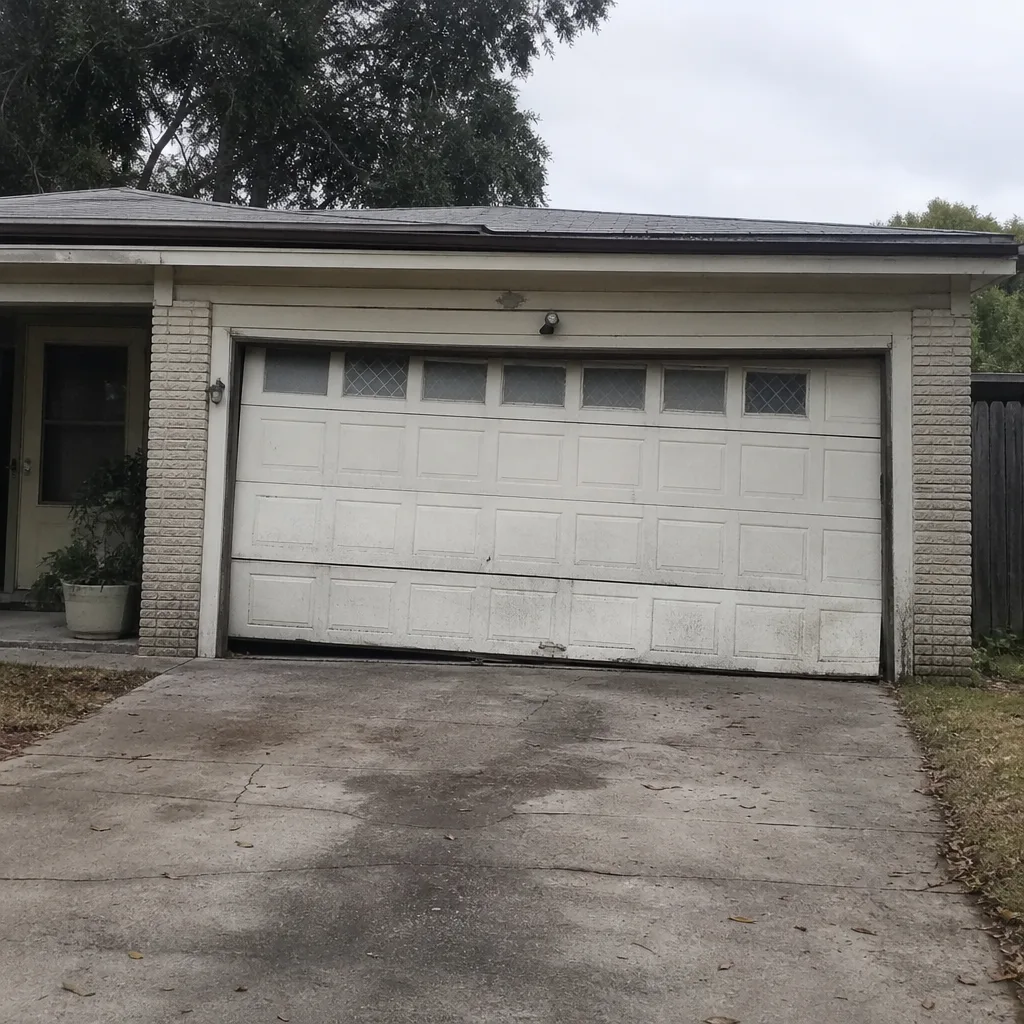 Before
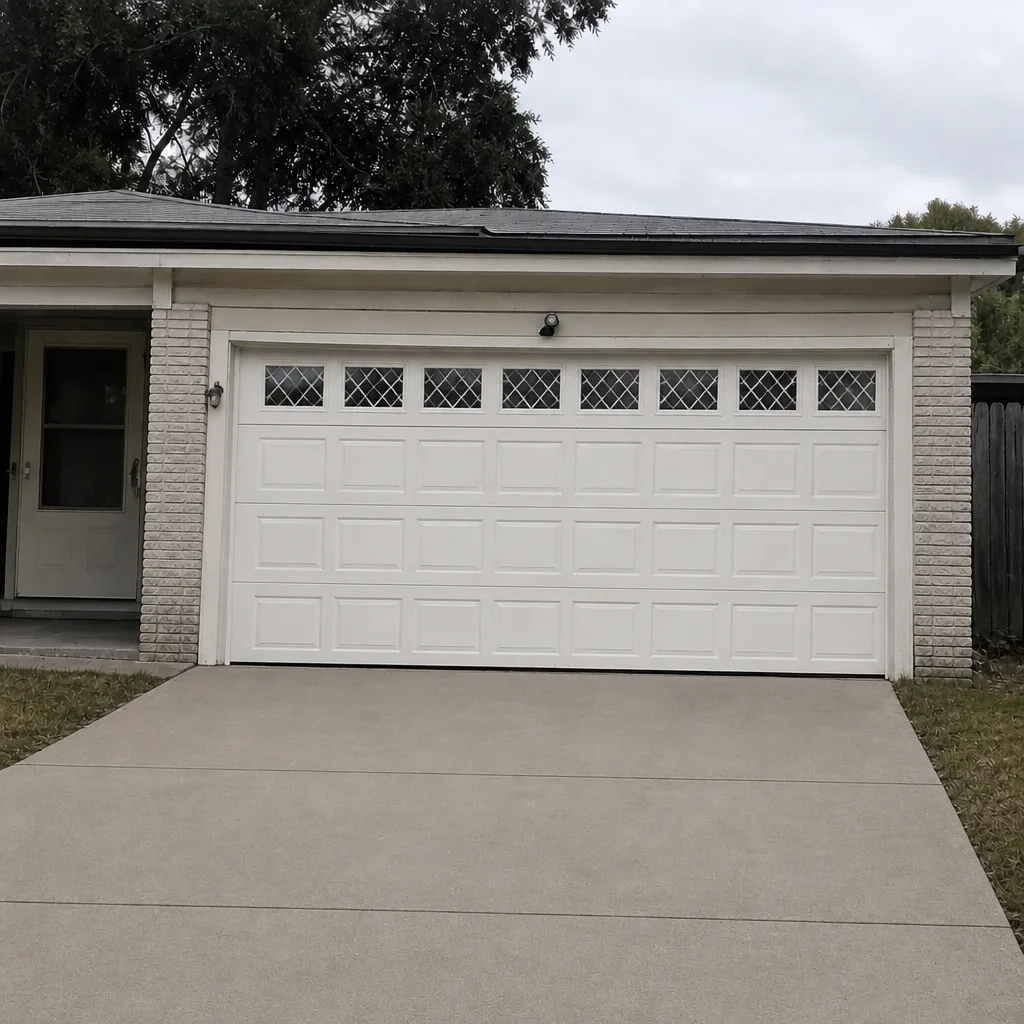 After
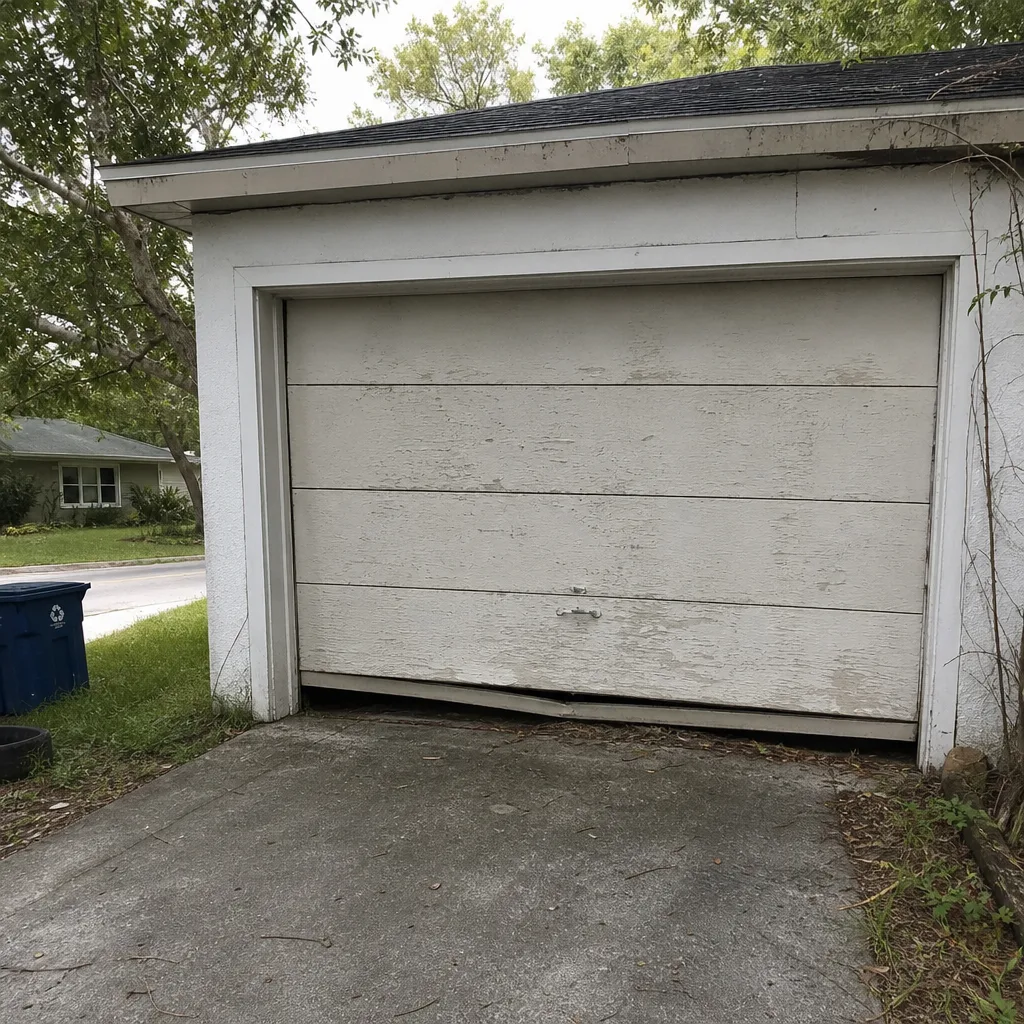 Before
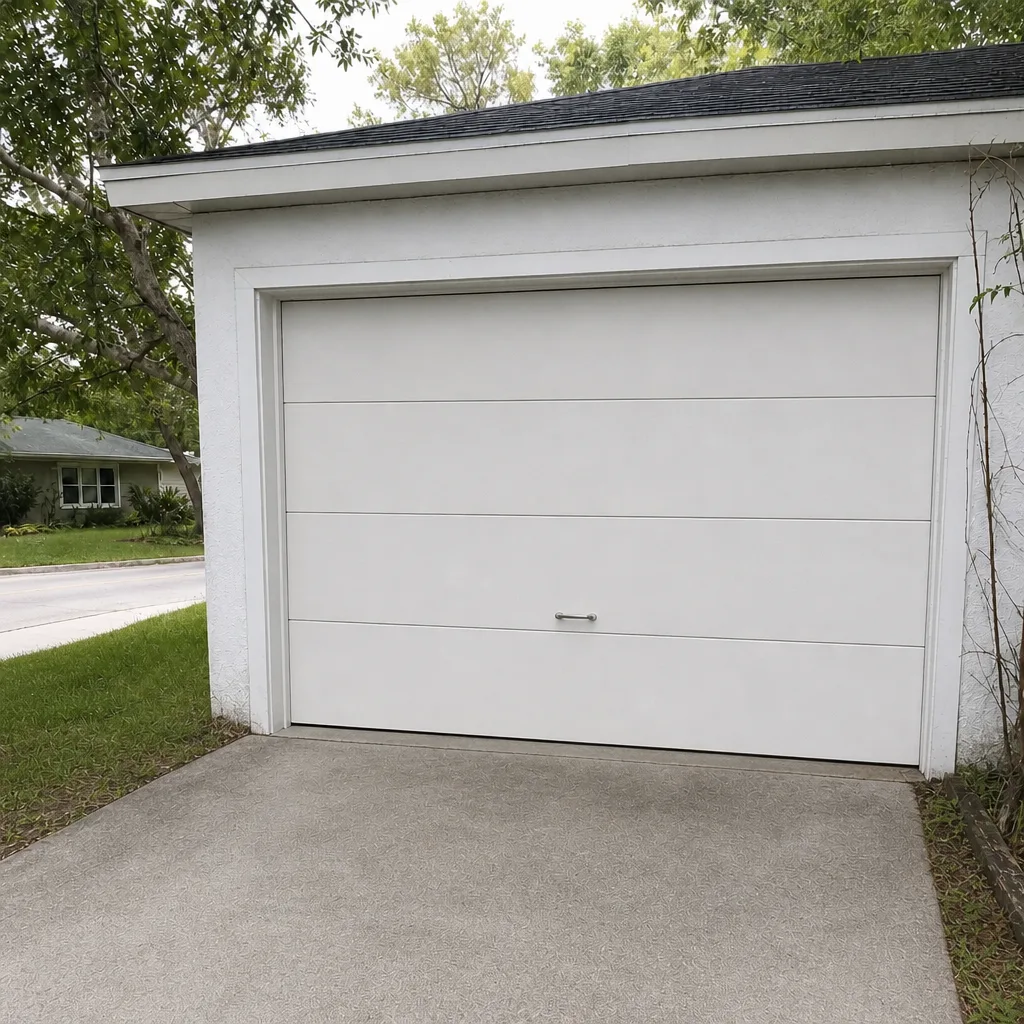 After
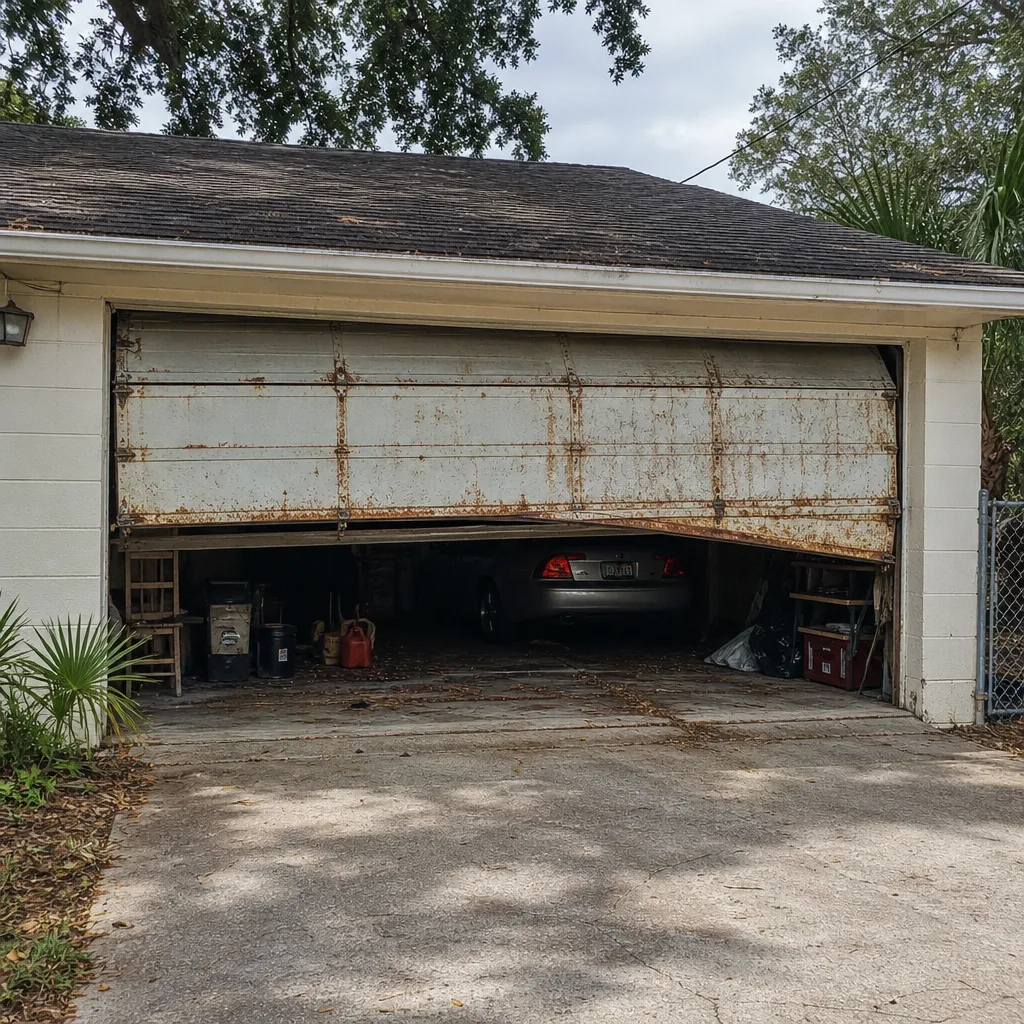 Before
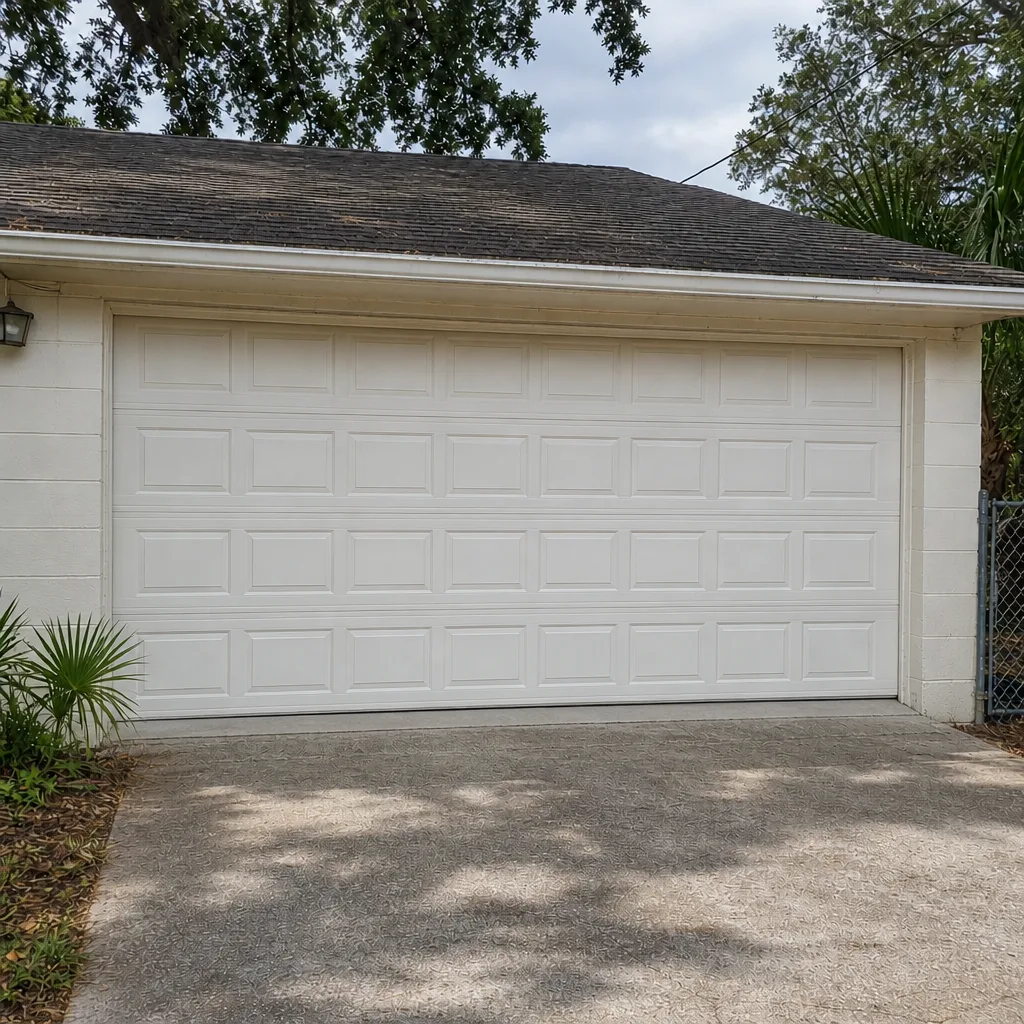 After
When to Call a Professional
Call a professional when the task involves a spring, a cable, the track, a full door, or a new opener. Those are the jobs with stored energy, permit requirements, or warranty exposure, and they’re the ones where a mistake costs more than the service call. Call right away if the door won’t lift, has come off the track, or the opener keeps reversing after you’ve checked the sensors and the seal yourself.
Garage Door Repair Seminole Heights offers free estimates in Seminole Heights. Call (877) 757-4452 and we’ll talk you through what’s worth your own time and what isn’t, then give you a written price before anything starts. Our technicians have up to 15 years of experience, and they work on the system already in your garage, from a Clopay panel to a LiftMaster opener. If you’ve done the safe tasks and run into the ones that aren’t, the call is the next step.
Frequently Asked Questions
Yes, a homeowner can perform their own door replacement in Florida. What complicates it is the permit and inspection process, which typically applies to residential garage door replacement and runs through the local building department, plus any manufacturer warranty conditions on the door. Call your local building department before you commit, and check the door’s warranty terms. If you decide you’d rather have it done and inspected in one step, call (877) 757-4452 for a free estimate in Seminole Heights.
Torsion springs store mechanical energy measured in foot-pounds, and they’re held under that load whenever the door is closed. Adjusting or removing one means releasing that energy, and the tools that do it (winding bars) can slip under load with no warning. No other garage door repair stores energy the same way. That’s why spring work is a trained-technician task and why we recommend scheduling it rather than attempting it yourself.
It can. Several major opener brands, including Chamberlain and LiftMaster, write installation conditions into their warranty terms, and a homeowner install can void coverage on the control board and accessories even if the motor stays covered. You can also lose access to app and smart features that require a certified installer to pair. If you want the warranty intact, have the opener installed professionally. Call (877) 757-4452 for an estimate on the opener you’re considering.
Weatherstripping and bottom seal replacement, safety sensor alignment, lubrication of the rollers and hinges, remote and keypad reprogramming, and visual inspection are all safe homeowner tasks with no permit and no warranty exposure. Doing a monthly visual check and handling those jobs yourself is a genuinely good use of your time in Seminole Heights. Anything touching springs, cables, tracks, or a new opener is where the line sits.
Often, yes, but same-day availability depends on the day and the job. Spring repair is a fast, standard job for a trained technician, and a broken spring is the most common reason people call. Fast dispatch from 7am to 7pm is how we schedule our technicians, so call (877) 757-4452 and we’ll tell you what’s open for a repair on the day you call. We’re closed on Saturday, so a door that fails then gets booked for Sunday.
Yes. We service systems made by LiftMaster, Chamberlain, Genie, Clopay, Amarr, Wayne Dalton, Craftsman, and Raynor, so we’re diagnosing the actual system you have rather than substituting a generic part. That’s the difference between a fix and a second service call. If you’re not sure what’s on your door, call (877) 757-4452 and we’ll help you identify it before the visit.
The Bottom Line
The DIY-vs-professional question isn’t about whether you’re handy. It’s about which specific tasks carry stored energy, a permit requirement, or a warranty consequence, and which ones don’t. In Seminole Heights, weatherstripping, sensor alignment, lubrication, and remote programming belong in your column. Springs, cables, tracks, doors, and openers belong in a technician’s, because those are the jobs where a mistake isn’t a redo, it’s an injury, a failed inspection, or a voided warranty. One shop that covers install, repair, and parts is the simpler path than splitting the job. Call (877) 757-4452 for a free estimate and a written price before any work starts.
Written by the team at Garage Door Repair Seminole Heights.